You buy some USDT on Binance P2P, and the next day your bank card won't work: payments bounce, withdrawals are blocked, and there's an "account frozen" notice. It's one of the most stressful things a newcomer runs into. The most important thing first: a freeze usually does not mean you broke the law, and plenty of people are caught in it while completely innocent. Panicking and doing something rash tends to make it worse.
This guide breaks a P2P freeze down: why it reaches you, the two kinds of freeze, what to do in order, and how to lower the odds. One note up front: this is general information, not legal advice; every situation differs, so go by what your bank and the relevant authority actually tell you, and if the amount is large or a case is involved, talk to a lawyer early.
First, breathe: a freeze does not mean you broke the law
The first reaction to a freeze is usually "did I commit a crime?" In the vast majority of cases, no. P2P is a peer-to-peer deal between you and another person (a merchant), and the cash runs through your bank account. If the money that person received or passed on happens to trace back, somewhere upstream, to fraud, online gambling, or money laundering, then as investigators follow the trail of funds they place holds on the accounts it flowed through one by one, and that can include an innocent recipient like you who simply bought crypto and happened to catch a "dirty" payment.
So a freeze is at heart a measure taken against suspicious money by a bank or an authority; it targets the funds, not necessarily you as a person. Grasp that, and you won't fall apart while handling it: the job is to cooperate, verify, and prove your side, not to panic and start moving assets around.
Why a P2P trade can get your bank account frozen
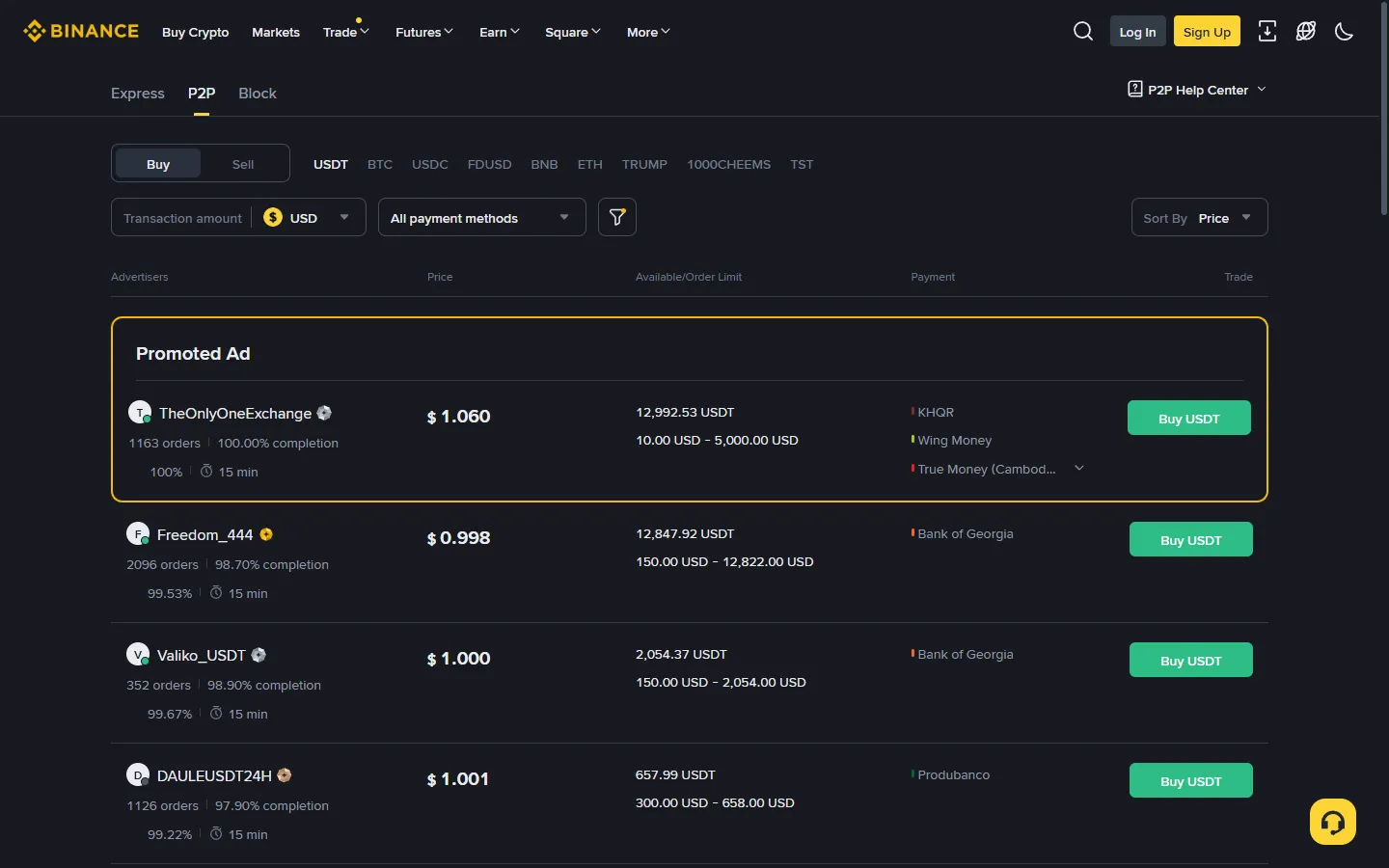
To see where the risk comes from, follow the money. When you order USDT on Binance P2P, the platform locks the merchant's USDT in escrow, you send local currency straight to the merchant from your bank, and once they confirm receipt the USDT is released to your account. The key point: the fiat leg is a direct transfer between you and the merchant, it never passes through Binance, and Binance only escrows the crypto and never touches your bank account.
The risk lives in that direct transfer. If the merchant (or the source further upstream) is moving tainted money, then when a victim reports it and the bank's compliance team or law enforcement traces where the money went, your account can be caught as one link in the chain. You had no way to know the funds were dirty, but tracing follows the money mechanically, and who is innocent gets sorted out afterward. This is exactly why choosing clean, reliable merchants is the single most important defence in P2P, and how to pick them is covered in detail in Buy USDT on P2P.
Two kinds of freeze: bank compliance vs legal order
The word "freeze" covers two quite different situations. Tell them apart and you'll know who to contact and roughly how long it takes:
| Type | Who initiates it | Rough characteristics |
|---|---|---|
| Bank compliance hold / freeze | The bank's own anti-money-laundering system | The bank flags a transaction as suspicious and limits it; often has a chance to lift relatively quickly once you contact the bank and explain |
| Legal freeze | Law enforcement or a court order | Tied to an actual case, with a defined legal duration that may be extended; usually longer, and needs you to cooperate and submit evidence |
The two have completely different routes to release: a compliance hold is mostly about talking to the bank, while a legal freeze means dealing with the authority and going through the proper process. Which one it is, how long it lasts, and what release requires all depend on the individual case, and you must go by the official word from the bank and authority that froze your account. The "lifts in a few days" or "always six months" you read online cannot be taken as fact.
If you're frozen, do these things in order
It's normal to be rattled, but handle it in order. The steps below start with "first, don't make it worse":
- Stay calm; don't rush to move other assets. After you notice the freeze, don't hurriedly move or scatter money from your other accounts. From an investigator's view that can read as suspicious, so stop and find out what's going on first.
- Find out who froze it and why. Contact your bank (in person with ID, or by phone) and get clear on whether it's a compliance hold or a legal freeze, which authority initiated it, the reason, the duration, and the contact details. This is the basis for everything after.
- Gather the full evidence for the trade. Save the P2P order screenshots, payment records, your chat with the merchant, and your Binance transaction history, all of which show you bought USDT normally, for real value, from a legitimate source. Build the habit of keeping records; it's a lifesaver at moments like this.
- Contact the authority and cooperate to verify. Using the details the bank gives you, reach the authority, explain truthfully that you bought crypto normally via Binance P2P and are not a party to any case, submit the evidence above, and cooperate with the review or request release through the proper channel.
- Consult a lawyer when needed. If the amount is large, it's a legal freeze, or the verification isn't going smoothly, talk to a qualified lawyer early and protect your rights properly. Do not tough it out alone.
- Ask Binance support for help. Through Binance's official website or in-app live support, report the freeze and request official proof of the order. Use only the official entry and watch for fake support: if you aren't sure someone is official, check them on the Binance verification page.
The bank froze or closed my account: how do I escalate?
Outside a criminal case, a bank that spots crypto-related money it does not like will more often freeze the account and ask where the funds came from, or simply give notice that it is closing the account. Handle it in the same order as above: call or visit to find out exactly which measure it is and what they want, then send your order records, chat logs and statements in writing. If the bank's final answer seems unfair, or no answer comes, you can escalate:
- UK: if the bank has not given a final response within 8 weeks, or you disagree with it, complain to the Financial Ombudsman Service (FOS) within 6 months of the final response; it is free;
- Canada: after 56 days of complaining to the bank, you can go to the Ombudsman for Banking Services and Investments (OBSI);
- Australia: use the bank's internal complaints process first, then the Australian Financial Complaints Authority (AFCA); banks generally have to give about 14 days' notice before closing an account;
- US: file a complaint online with the Consumer Financial Protection Bureau (CFPB); banks usually respond within 15 days;
- Elsewhere: complain to the bank in writing and keep the complaint reference, then go to your country's banking ombudsman or the central bank's consumer complaints desk.
A complaint tests whether the bank acted fairly, for example closing an account without notice or holding funds with no explanation. If the freeze comes from the police or a court, you still deal with the authority named on the freeze notice.
Beware the "pay to unfreeze" follow-up scam
Once you're frozen, you'll likely get messages or calls from strangers claiming they "know someone on the inside," can "unfreeze it for a fee," or "have connections to get your card out." These are almost always scams, targeting people who are already frozen and desperate, purely to fleece you a second time.
Legitimate unfreezing has exactly one path, the lawful process at your bank and the relevant authority, and there is no "pay to fix it" shortcut. Being frozen is bad enough; don't hand a second sum to a scammer. For more on spotting this kind of play, see the scam prevention guide.
How to lower the odds of a P2P freeze
Honestly, as long as you trade peer-to-peer with strangers through your bank, you can't bring the freeze risk to zero, because you can't be one hundred percent sure the other side's money is clean. But these habits clearly push the odds down:
- Only pick reputable merchants. Favor verified merchants with high volume, a long account history, and strong completion rates and ratings; be wary of prices noticeably better than the market, since an unusual bargain often has an unusual source.
- Use a dedicated account. Keep one bank account just for P2P, separate from your main or salary account, so if it's ever frozen the hit to daily life is smaller.
- Avoid unusual patterns. Frequent in-and-out over a short window, or sudden large amounts, are more likely to trip a bank's risk controls. A steady pace, with amounts in line with your usual finances, carries lower risk.
- Never move money for anyone else. Only send and receive for your own trades, and do not "pass funds through" or collect on behalf of strangers, which is exactly how laundering chains pull ordinary people in and a common way to get caught up.
- Keep records for every trade. Save the order, chat, and statements as a habit. You won't need them most of the time, but the moment you're questioned they're your strongest proof.
Getting your security and your money habits right together is the foundation for using Binance calmly over the long run; the account-level checklist is in account security setup. If your compliance and safety needs are especially high and the sums are large, also consider other funding methods that suit you better, so you are not relying on P2P alone.
FAQ
Does buying crypto on Binance P2P always get your bank account frozen?
No. The vast majority of P2P trades complete normally with no trouble; a freeze is a low-probability but real risk. It usually happens when the money you received happens to be tied to suspicious funds upstream, and has nothing to do with whether you traded properly. Picking reputable merchants and keeping records clearly lowers the odds, but cannot make the risk zero, which is inherent to P2P.
Did Binance freeze my account? Can Binance unfreeze it?
Generally it is not Binance. What freezes your bank account is your bank's compliance team or a law-enforcement body; Binance has no reach over your bank account and no power to unfreeze it. What Binance can do is provide proof of that order to help you show the funds were legitimate. Actual unfreezing means dealing with the bank and the authority that placed the freeze, through the proper process.
How long does a P2P-related freeze last?
It varies, with no single answer. A bank-level compliance hold may lift relatively quickly once things are verified; a freeze tied to a legal case has a defined duration that can be extended, and usually drags on longer. The exact duration, reason, and conditions for release are whatever the bank and the authority that froze your account officially tell you.
Someone says they can unfreeze it for a fee. Is that legit?
Do not believe it; that is a follow-up scam aimed at people who are already frozen and desperate to get unfrozen. Legitimate unfreezing only runs through the lawful process at your bank and the relevant authority, and no insider connection can be bought. Once word of your freeze spreads, these scammers come looking for you, so block them and do not hand over a second sum of money.
How do I lower the risk of a P2P freeze?
Do several things together: favor verified merchants with high volume, long history, and strong ratings, and be wary of prices well off the market; use a dedicated account rather than your main or salary account; avoid unusually frequent or large in-and-out patterns; and keep the order, chat, and statement records for every trade. These clearly lower the odds, but as long as the counterparty's funds are dirty you can still be caught, so it cannot be fully avoided.
A P2P freeze comes down to "caught in a money trail," and picking the right merchant, keeping records, and cooperating calmly are the parts you can hold in your own hands. If you hit something you can't read, don't carry it alone, and for the actual legal and unfreezing steps, go by your bank, the authority, and a qualified lawyer.