Before you sign up, the first thing to settle is whether Binance is available where you live, not something to discover after you have already funded an account. Where Binance offers services, and how fully, is decided together by its terms of use and the regulator in each place, so the answer is neither simple nor fixed. This guide does two things only: it shows you how to check the current restricted list through official channels, then lays out the public status of a few typical regions as a reference. The stance up front: this article states facts and official wording only, and it offers no method for getting around a regional restriction.
How do you check Binance's official restricted-region list?
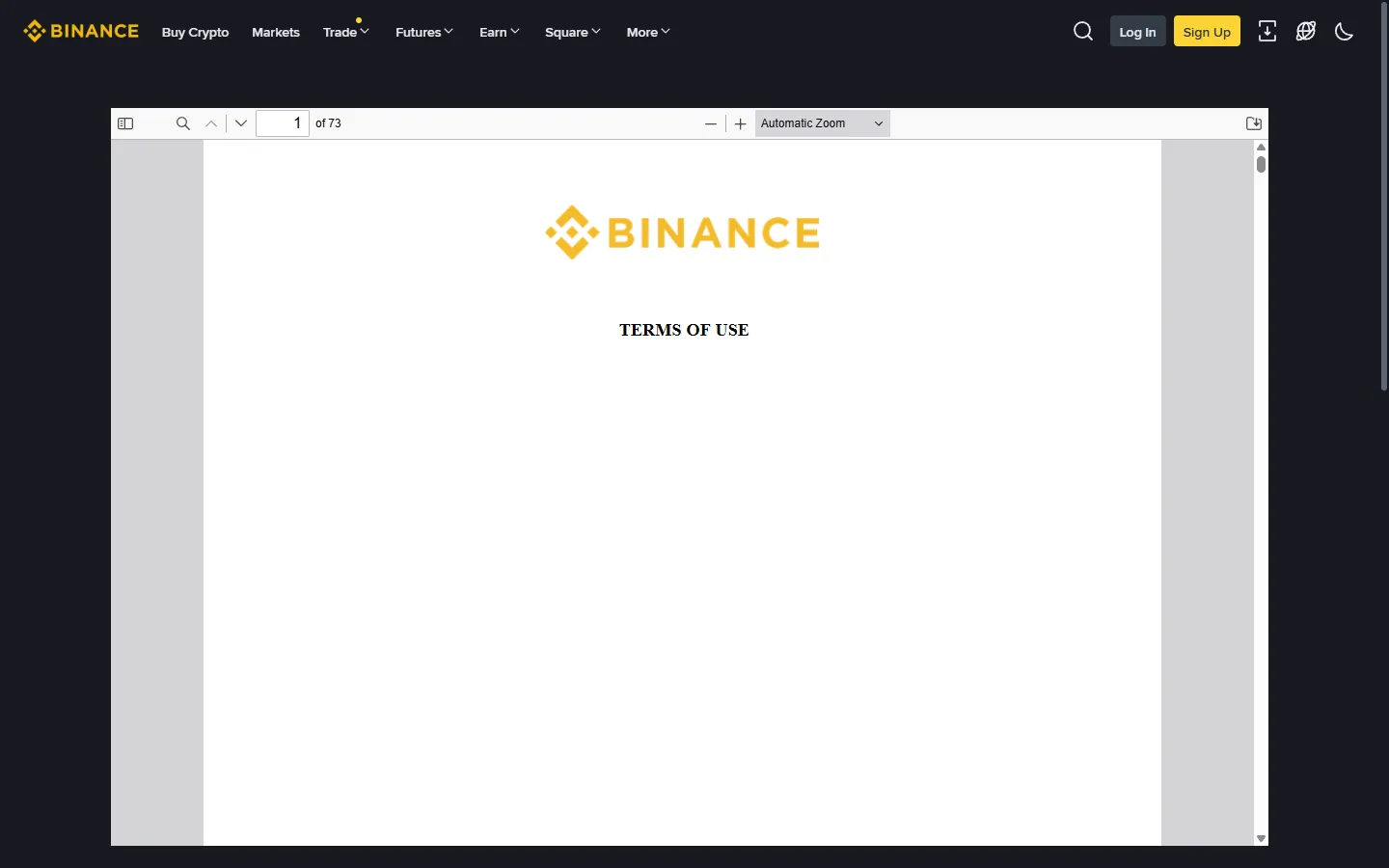
The most reliable source is Binance's own Terms of Use and the List of Prohibited Countries attached to them. The January 5, 2026 version names the United States (including US citizens), Canada, the Netherlands, Cuba, North Korea, Iran, and the Crimea, Donetsk and Luhansk regions. Sign-ups from those places are refused outright, and existing accounts there are asked to move their assets out.
There are three ways to check, ranked from most to least authoritative:
- The Terms of Use text: the footer of Binance's official site has a "Terms of Use" link, so find the restricted-jurisdiction clause and read it word for word, which is the final reference;
- The official Help Center: search "restricted regions" or "service scope" in the Binance Help Center for the official explanatory articles;
- What the sign-up page actually does: when a region is not supported, the sign-up step blocks it and says the service is unavailable, which is the most direct and honest signal of all.
The test is always the current version of the official terms and what the sign-up page actually shows, not any third-party retelling, this article included. What we can promise is that we checked the public wording when we wrote this; we cannot promise the list has not moved by the time you read it.
What the status looks like in a few typical regions
Beyond the prohibited list, plenty of places are not named in the terms but still cannot open an account in practice. Going by public information as of September 2026, they fall into four groups:
| Category | Example | Public status |
|---|---|---|
| Separate local platform | United States | Served by Binance.US, run separately from the global site |
| No new sign-ups | European Union, United Kingdom | No new registrations in the EU since July 1, 2026, and in the UK since October 16, 2023 |
| Blocked by local regulators | Malaysia, Thailand, the Philippines, mainland China | Regulators say Binance is unlicensed there; the website is blocked or local residents are not served |
| Full exclusion | Sanctioned regions | No services provided at all |
United States: use Binance.US, not Binance.com
US users are served by Binance.US, which registers and operates separately, and the global Binance.com is not open to US residents. The two platforms do not share accounts, and Binance.US carries noticeably fewer coins and features than the global site. If you are in the United States, take your sign-up and usage rules from the Binance.US site, because this guide is written for the global platform and many details will not line up.
European Union: no MiCA licence, no new sign-ups
The transition periods under the EU's Markets in Crypto-Assets regulation (MiCA) all ended by July 1, 2026, and platforms without a licence then had to stop serving EU users. Binance does not appear in the European Securities and Markets Authority (ESMA) register of licensed crypto-asset service providers, and it has not accepted new EU registrations since July 1. Existing accounts get an in-app notice saying which features were switched off; reports at the time said withdrawals stayed open. If you live in the EU, pick a platform from the ESMA register, which you can filter by the country a firm is allowed to serve.
United Kingdom: no new users since October 2023
After the Financial Conduct Authority's (FCA) crypto promotion rules took effect, Binance stopped taking new UK users from October 16, 2023. If you live in the UK, check the FCA's Financial Services Register first and use only a crypto-asset firm listed there.
Malaysia, Thailand, the Philippines: blocked by regulators
Malaysia's finance ministry confirmed in a July 2026 parliamentary answer that Binance is not registered with the Securities Commission (SC) and that its website and app remain blocked. Thailand's SEC had Binance's global site blocked in 2024, and Thai users are served by the licensed Binance TH instead. In the Philippines, the SEC issued a warning in 2023 and the telecoms regulator ordered the site blocked in March 2024. Readers in these countries should choose from their own regulator's licensed list: the SC's list of digital asset exchanges in Malaysia, the SEC's "Check First" search in Thailand, and the central bank's (BSP) list of virtual asset service providers in the Philippines.
Sanctioned regions: no access at all
Regions covered by international sanctions are fully excluded under sanctions law, with no services and no exceptions. There is no grey area here and no workaround, and no third-party claim to the contrary changes that.
This is not the full list, only the groups readers ask about most. If your country is not above, still run the checks in the section before this one before you deposit anything.
Binance is not available where I live. What now?
It depends on where you stand:
- You have not signed up yet: pick a platform from the licensed-firms list of your country's securities or financial regulator, usually published on the regulator's site as a "register" or "authorised firms" list. With a licensed platform you can complain to the regulator if something goes wrong, which matters far more than a slightly lower fee;
- You already have an account and got a regional notice: check that the same notice appears inside the app (do not click links in the email), then move your assets to a platform you can use legally or to your own wallet within the deadline it gives. The steps and network choice are in the withdrawal guide; send a small test first;
- You actually live in another country: register with your real residence and a local ID and fill in verification truthfully. That is an ordinary account, not a workaround. If you verified earlier and moved later, update your residence through Update Identity in the verification centre.
Whichever case you are in, do not use a VPN or someone else's or another country's identity to sign up. Those accounts get restricted at a verification review, and getting the money back means a long appeal that may not succeed.
The list changes: at sign-up, go by what the page shows
The regulatory environment shifts, and Binance's service range shifts with it: some regions reopen or move to a local entity after a licence comes through, while others withdraw as policy tightens, so this year's list is not next year's.
For an ordinary user, that means three habits: check the terms once before you sign up; keep an eye on the region prompts in your account if your residence changes; and read any Binance email or announcement about a service change in full, then act on its guidance. A security note to go with that: emails along the lines of "your account will be restricted, click here to handle it" are exactly the template phishing loves to copy, so look for the same announcement inside the app first, and do not click a link straight from the email. The full anti-phishing routine is in account security.
Our stance: no methods for getting around regional limits
This article, and everything on this site, provides and discusses no means of getting around Binance's regional restrictions, including but not limited to faking residence details or verifying with someone else's identity.
This is not a pose; it is the conclusion after doing the math on your behalf. Registering with false information breaks the terms of use from day one, and an account like that can be restricted at any point during a risk-control check or a verification review. At that moment your assets are inside and you are locked out, the appeal drags on with no guarantee of success, and nobody covers the loss. For readers whose region is restricted, the realistic option is to watch for a locally compliant alternative platform, or to wait for the regulatory picture to change, rather than putting money into an account the rules can close on you at any time. This judgement has nothing to do with our promotional role: we earn a rebate when readers register through our referral code, but we only want those registrations to come from regions Binance can serve normally.
Frequently asked questions
How do I confirm whether Binance is available where I live?
Two steps: check the restricted-jurisdiction list in the official Terms of Use, and watch what the sign-up page actually does, since it says the service is unavailable when a region is not supported. Both signals go by the version in force at the moment you act, and any third-party list, this article included, is only a reference.
What happens if I register from a restricted region anyway?
Registering with false information breaks Binance's terms of use. An account like that can be restricted or frozen at any time during a risk-control or verification review, and getting funds back then means a long appeal that may not succeed, with nobody covering the loss. This is not a scare tactic; it is the outcome the terms spell out.
I already have an account. What happens if I move to a restricted region?
Binance may adjust the services available to your account based on your residence and usage, and the usual approach is advance notice with a window to handle your assets. Do not put off a notice like that; check that the same notice appears inside the Binance app, then follow its guidance, so nobody phishes you in the confusion.
Are Binance.US and Binance.com the same company?
Same brand roots, separate operations: Binance.US is an independent, compliant platform for US users, and its accounts, coins, and features do not connect to the global Binance.com. US users register on the former. This site's guides are for the global platform, and Binance.US interfaces and rules go by its own site.
With the region question settled, the road ahead is the usual three steps: signing up, identity verification, and a small test run. If anything about the list changes, we will revise this article and log it on the corrections page, but the list tends to move faster than our revisions, and what the sign-up page shows right now is what counts.