Some traps are not set by strangers. This one usually arrives as a request from someone you know: my account will not verify, so can you buy a little for me on yours; this payment is awkward for my bank, so can it go into your account first. Because the person asking is a friend, a cousin, someone from your hometown, most people say yes before they have weighed anything. Our advice is to turn every one of these down.
Three layers of risk, each heavier than the last
First, the platform's rules. Exchange accounts are verified to one person, and the terms generally expect that person to be the one using it. Hand your account to someone else, and any dispute, theft, or rule-breaking trade is dealt with under the verified name, which is yours. That can mean a restricted or permanently closed account, while the person who actually used it simply opens another one.
Second, the money trail. You have no idea where the other person's money comes from. If any of what passes through your account or card turns out to be tainted, everything described in our article on dirty money lands on your name: frozen accounts, questions from the bank, being drawn into a case. And unlike receiving bad money by chance in a trade of your own, knowingly letting someone else's money pass through your account makes it far harder to argue you had no idea.
Third, the law. Letting other people route money through your bank card or account is exactly what authorities in many countries go after, because it is the standard way fraud proceeds get moved. The US Department of Justice's Money Mule Initiative defines money mules as people who receive and move money taken from fraud victims at someone else's direction. It warns that doing so knowingly can lead to criminal charges, and that people who do it without realizing still help fraudsters harm others. In your head you are helping a friend. From the outside it looks like the same work a professional mule does. This layer outweighs the other two, and it is the firmest reason to say no.
What the Justice Department tells people in this spot
The DOJ page linked above is short, and worth reading in full. Its first answer is the part most people skim past. Some money mules know they are working for criminals; others move money at someone else's direction without realizing who benefits, and the page says plainly that they still enable fraudsters to harm others. Not knowing is a reason to stop, not a defense to lean on.
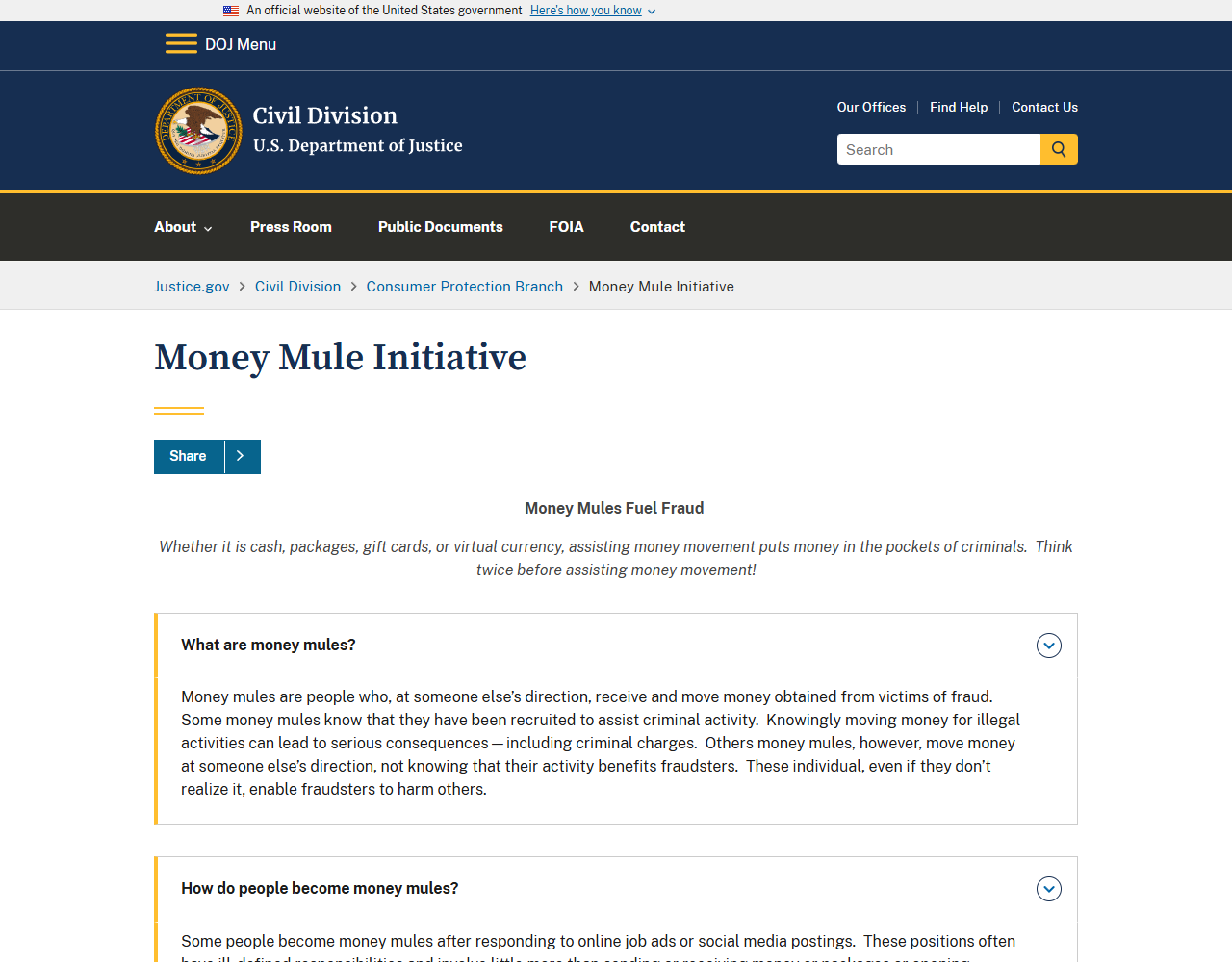
The same page describes how people get pulled in: online job ads and social media posts for roles with vague duties that come down to receiving and sending money or packages, online relationships, and messages from people posing as lottery or sweepstakes officials. Its advice is just as direct. Be wary of any request to receive and forward money, packages, gift cards, or virtual currency, and never agree to move money for someone you have never met in person.
In crypto the pitch changes its clothes but not its shape. It tends to arrive in one of these forms:
- "Buy some USDT with your card and send it to my wallet, I'll pay you back by bank transfer." If that transfer came from a hacked account or a fraud victim, it can be pulled back, and you are the one who already sent the crypto.
- "Can you verify an exchange account for me? It's just your ID and a selfie." That is renting out your identity, and every trade on that account is yours on paper.
- "Remote job: crypto payment processor. Receive client payments, convert them to USDT, forward the rest, keep a commission." The classic mule job with a crypto step bolted on.
- "My exchange account is frozen, can the money go through yours for a few days?" Often from someone met online, often urgent, and always someone else's money.
Why a request from a friend carries more risk, not less
Two reasons. A request from someone you know slips past your guard. If a stranger asked to use your bank card, you would refuse on the spot; when a friend asks, your mind fills in a sensible explanation by itself. And you know no more about your friend's money than a stranger's. They may be a link in the chain themselves, talked into it with a part-time payment job or a just-help-me-move-this-once story, and the next thing they do is try the same line on their own friends. That is how these chains grow.
Sometimes the ask is softer: you buy it for me and I will pay you back in cash or by bank transfer. In practice you complete the whole trade with your own verified account and your own bank card on their behalf. All three layers of risk still apply, and a fourth joins them, which is whether you ever get paid back.
How to say no without making it personal
The words are easy to find because they are simply true. The platform is verified in my name, so anything that goes wrong on the account is on me, and I cannot take that on. My bank closes accounts that get lent out, and my salary and my mortgage both run through that one. Put the reason on the rules and the bank, not on whether you trust them, and most people accept it. Someone who ends a friendship over it has told you something about the friendship.
If their need is genuine, if they really want to buy crypto or open an account, the useful help is to send them our sign-up guide and let them go through each step with their own identity, their own card, and their own account. Showing someone how to do it themselves is not a platitude here. It is the only clean way to help.
If you already said yes
The DOJ page's advice for anyone who has already moved money comes down to four things: stop, do not send money to the person directing you, tell your bank, and report it. In practice, this week:
- Stop replying to the person who asked, and send them nothing more, including money they want "returned".
- Call your bank, explain what happened, and ask whether you should close the account and open a new one; the DOJ suggests considering exactly that.
- Lock down any exchange account they touched: change the password, reset two-factor authentication, remove devices you do not recognize, delete every API key, and turn on the withdrawal allowlist. Our account security guide shows where each setting lives.
- Keep every message, payment record, and screenshot. They are how you show later what you were told, and when.
- File a report with the FBI's Internet Crime Complaint Center at ic3.gov and with the FTC at ReportFraud.ftc.gov if you are in the US; elsewhere, go to your local police or your country's fraud reporting service.
None of this is legal advice. If the police or your bank's fraud team have already been in touch, a conversation with a lawyer is worth the cost.