We have a blunt rule for P2P trading: the trade is usually won or lost before you tap Buy. The platform's escrow takes care of the swap itself, holding the coins until the payment is confirmed. What it cannot do is check whether the money you receive is clean, or whether the person on the other side intends to dispute a payment later. Choosing who you trade with is the part you control, so this guide covers only that. The step-by-step buy flow on Binance P2P lives in our P2P buying guide.
Why the counterparty matters more than the price
A slightly better rate saves a few dollars on a typical order. The wrong counterparty can cost you far more. If someone pays you with money that came from fraud, the trouble can follow that money straight to your bank account, and the fact that the P2P order completed normally is not something your bank will weigh in your favor. How that money finds its way to a seller, and what evidence helps afterwards, is covered in our article on receiving dirty money. A lot of the P2P crypto account frozen stories people share online trace back to who was on the other side of the trade rather than to the platform. What a freeze looks like, and what to do if it happens, is covered in our guide to P2P bank freezes.
Five numbers worth reading
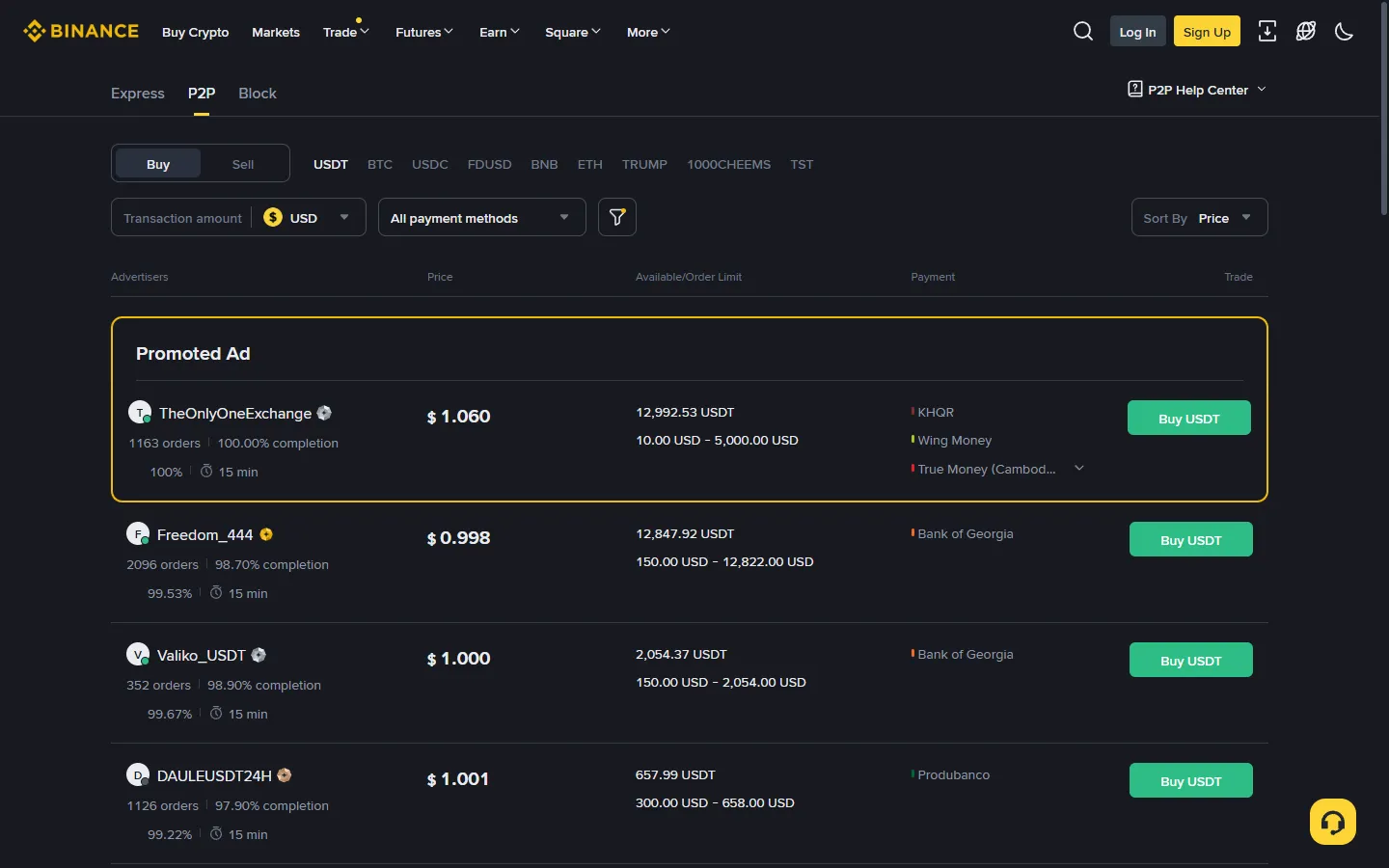
Every merchant on a P2P market list shows a handful of figures next to the price. Sorting by price alone skips the useful part. Read these five first:
| Number | What it tells you | How we read it |
|---|---|---|
| Completed orders | How much trading history stands behind the merchant | Our own floor is a count in the thousands; with less history we want every other signal to be strong |
| Completion rate | The share of orders that actually finished | A rate well below 95% raises a question: why did so many orders not finish? |
| Account age | How long the merchant has been trading | An account with years behind it has more to lose than one opened last month |
| Verified badge | The platform reviewed the merchant and usually holds a deposit from them | When prices are close, the badged merchant wins |
| Average release or payment time | How quickly they respond | Minutes, not tens of minutes; slow merchants make nervous traders, and nervous traders make mistakes |
One caveat keeps these numbers honest: a good history can be inherited. An account with a long record can change hands or be taken over, so the figures lower the odds of trouble without removing it. That is why the red flags further down still apply to merchants with perfect stats.
The one people skip: the order limits
Every listing shows a minimum and maximum per order. Most people use it only to check whether their amount fits, yet it says more than that. The limit range reflects the merchant's size and the customers they want. A merchant whose minimum is already large works with bigger clients, so a small order may sit at the back of the queue or be cancelled. A merchant with a low maximum forces a larger trade into several orders, which multiplies the steps where something can go wrong.
The useful habit is to see where your amount lands inside the range. Near the middle, you are the merchant's typical customer and the process tends to run smoothly. Orders right at the edge of a merchant's range are the ones we have seen stall or get cancelled more often. That is a pattern from trading this way for a while, not a rule any platform publishes, so treat it as a tiebreaker rather than a law.
And the first time you trade with a new merchant, keep it small. One small order shows you how fast they release, how they communicate, and whether anything about the process feels off. If it goes cleanly, the bigger order can follow. It is the same logic as sending a test transfer before moving a large amount on-chain.
Three red flags that end the trade
The numbers add confidence. These three take it away, and any single one is reason enough to cancel and pick someone else:
- A price that is too good. Someone offering to buy well above the market, or sell well below it, is paying for something. Often what they want is to turn money of doubtful origin into clean-looking crypto, and your account becomes the laundering step.
- Any push to move off the platform. "Let's continue on WhatsApp" or "cancel the order and I will pay you directly, it is cheaper": every version of this removes the escrow that protects you. It is one of the most common setups in P2P fraud, and our scam prevention guide covers the scripts in detail.
- A payer name that does not match. When you are selling and the money arrives from an account whose name differs from the verified name on the order, cancel. A relative paying on someone's behalf or a friend helping out may sound harmless, but third-party payments are exactly how tainted money gets passed along, and you are the one left explaining it if the bank asks.
Consumer agencies describe the same patterns in plain language. The US Federal Trade Commission's page on what to know about cryptocurrency scams is a good five-minute read if you want the wider picture.
Payment methods that can be clawed back
Some payment methods let the payer reverse a payment after it has gone through. Depending on the service, that can include certain card-funded apps and some online wallets. On P2P this cuts both ways. When you buy, expect many merchants to refuse reversible methods and steer you to a plain bank transfer, because a buyer could claw the money back after the coins are released. When you sell, the same risk lands on you: treat any payment that can still be undone as unsettled.
The rule we follow on the selling side is simple: release only against money that has actually arrived in your account and cannot be pulled back. A screenshot in the chat, or a buyer insisting they have paid, is not that. If you are selling to cash out, the receiving side is covered in more detail in our withdrawal guide.
A one-minute check before you trade
All of the above folds into five questions. Run through them before every trade with someone new:
- Have you read the merchant's completed orders, completion rate, and account age?
- Is the price within the normal band of the other listings?
- Is every message staying inside the order chat?
- If you are selling, does the payer's name match the verified name on the order?
- Is the account you pay from or receive into in your own name, and separate from the one your salary lands in?
Five yeses, then trade. P2P is not something to be afraid of. It hands the vetting job to you, and once that part is done properly, the rest of the flow is the easy part. For how P2P compares with the other ways of moving money in and out of crypto, see five routes ranked by risk.